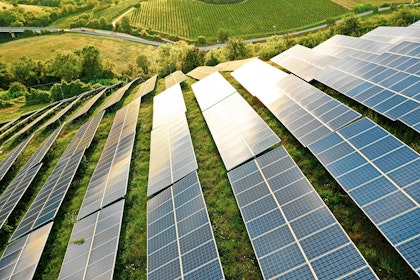
To achieve the Energy Commission’s ambitious goal of 40 TWh of new power production by 2030, solar power must play a central role. With a technical potential of 30 TWh for solar energy alone, combined with our expansive land area, Norway is well poised to significantly increase its solar power capacity. However, the removal of regulatory barriers is a crucial step to unlock this potential.
The Fastest Growing Energy Source
The Norwegian Water Resources and Energy Directorate (NVE) has, in its 2025 long-term power market analysis, indicated that rooftop and ground‑mounted solar power could produce 10 TWh by 2050. Globally, solar power is on the rise, a trend emphasized by the International Energy Agency (IEA) which considers solar energy as the fastest growing energy source. This is due in part to the rising demand for renewable energy and generally reduced production costs for solar cells.
License requirements for solar power plants above 10 mw
Previously, the construction of solar power plants required a license under the Energy Act where the developer or the local grid company had to install high-voltage equipment (voltage above 1 kV) to connect the plant to the grid. However, with effect from 1 July 2025 a new provision regulating when the development of solar power plants requires a license entered into force. Onshore solar power plants with an installed capacity below 10 MW are no longer subject to licensing; such projects are to be handled by the municipality in accordance with the Planning and Building Act.
Concurrently, the option to grant a license for a solar power plant with the effect of a national (state) plan was removed. There is currently no requirement for area zoning (områderegulering) of solar power plants.
First Ground mounted Solar Power Plant
In May 2022, the granting of a concession for the Furuseth solar power plant in Stor Elvdal municipality in Innlandet county marked a significant step towards expanding solar power in Norway. As the country's first land-based solar power plant, Furuseth solar power plant has been authorized to generate electricity equivalent to the consumption of over 300 households, with a total capacity of about 6.4 GWh.
Subsequently, a number of licences for the construction of solar power plants have been granted. Most recently, in June 2025, Energeia AS was granted a licence to construct the Seval Skog solar power plant in Gjøvik Municipality. The solar power plant will incorporate a battery energy storage system for intermediate electricity storage, thereby rendering the plant partially dispatchable.
New arrangement for sharing renewable electricity
At the end of June 2025, the Ministry of Energy announced a new arrangement for (virtual) sharing renewable electricity in commercial areas (Nw: næringsområder), scheduled to enter into force on 1 January 2026. The sharing arrangement permits businesses located within the same commercial area to share the electricity they produce. Total installed capacity of the production facilities participating in the sharing arrangement must not exceed 5 MW (AC) within a commercial area. Renewable electricity that is produced and shared within the same commercial area will be exempt from the electrical power tax and from the energy component of the grid tariff. The arrangement is intended to provide incentives for renewable power generation on already developed sites, primarily in the form of rooftop solar installations on commercial buildings.
Our Contribution
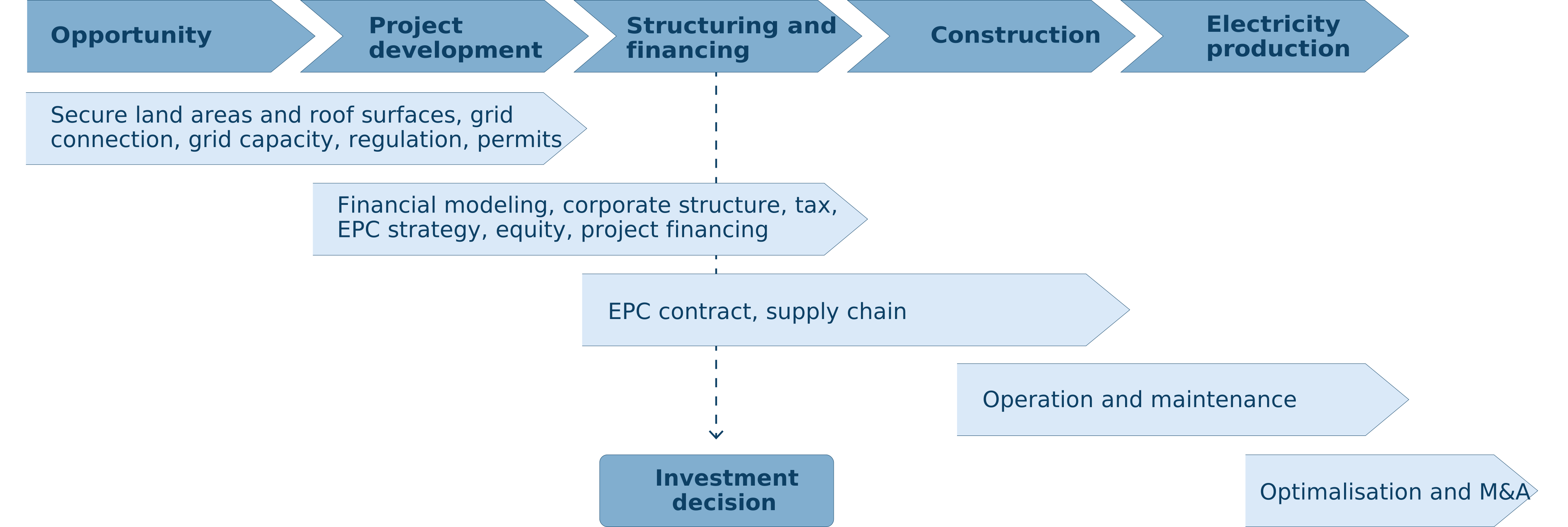
Thommessen has extensive experience advising renewable power producers and closely monitors developments in the solar power sector. We engage in a range of issues central to realizing the solar power potential in Norway, assisting power companies, project developers, banks, and investors with everything from concessions and contract management to transactions and structuring. With the right support and investments, we believe that the potential for solar power in Norway can be fully realized, significantly contributing to the country’s renewable energy goals. Feel free to contact us if you want to learn more about how we work with solar energy and the opportunities in this market.